Complete Lake Mead Bass Fishing Guide
Lake Mead Bass Fishing: The Complete Guide for 2026
America's largest reservoir, three bass species, 250 miles of shoreline. Where to fish, when to fish and what's biting in 2026.
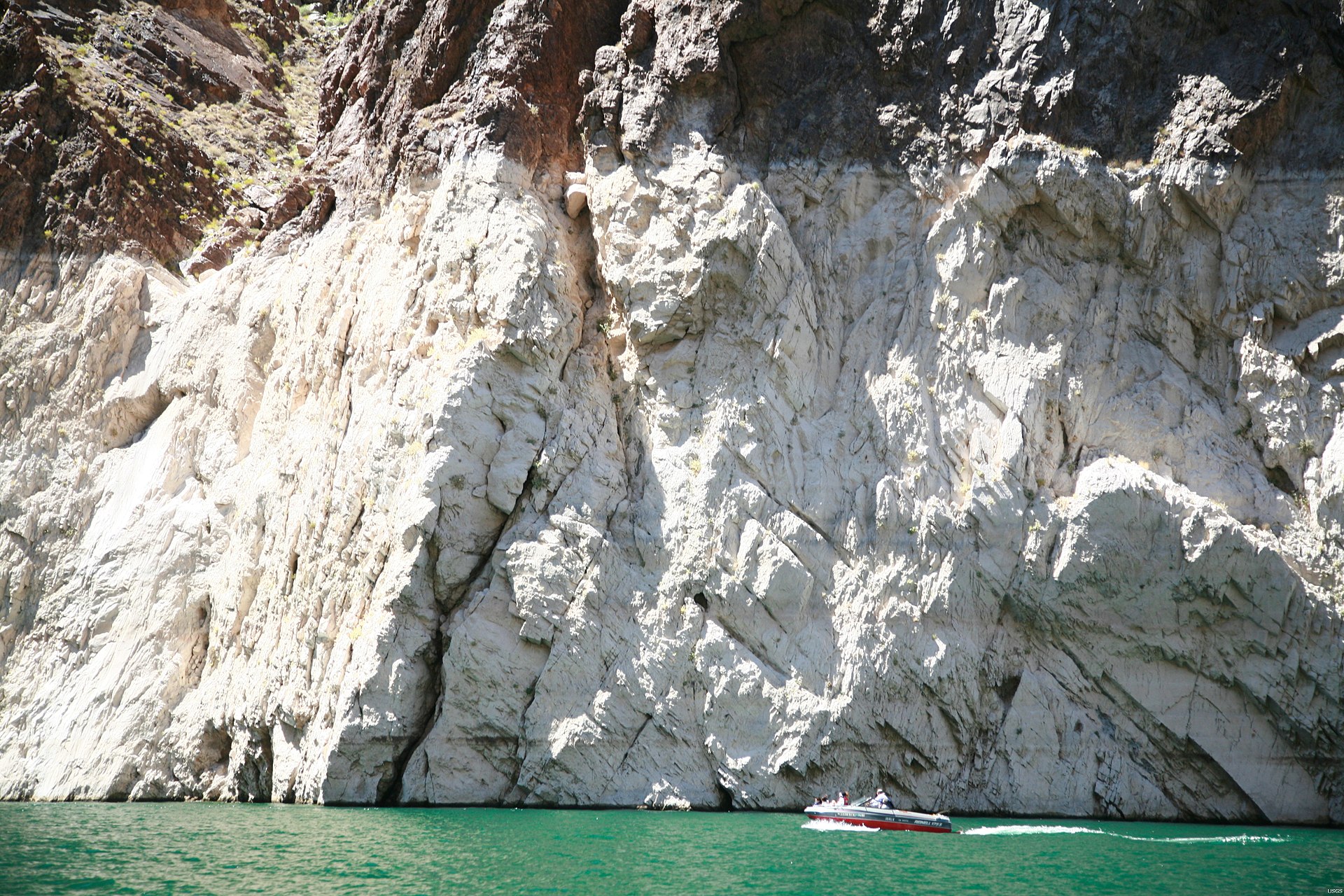
Lake Mead is the largest reservoir in the United States by volume — 247 square miles of clear desert water at full pool, 759 miles of shoreline, and depths past 500 feet at the dam. It is also the most rewarding bass fishery west of the Mississippi for anglers willing to learn it. Three bass species, year-round access, and the kind of structure that turns a good fish finder into a great one.
This is the editorial team's complete 2026 guide to fishing Mead — where to launch, what species you're actually catching, the seasonal patterns that move the fish, and the hard-won techniques that separate a tough day from a memorable one.
The lake at a glance
- Location: Nevada / Arizona border, 25 miles east of Las Vegas.
- Size at full pool: 247 square miles, 32 million acre-feet of water capacity.
- Depth: 500+ ft at Hoover Dam; canyon arms 200–400 ft; flats and coves often 10–40 ft.
- Water clarity: 8–25 ft visibility depending on season and basin.
- Primary species: Striped bass, largemouth bass, smallmouth bass, blue catfish, channel catfish.
- Secondary species: Crappie, bluegill, walleye (limited), rainbow trout (lower lake / Mohave overlap).
- Major basins: Boulder Basin, Virgin Basin, Overton Arm, Temple Basin, Gregg Basin, Lower Basin / Black Canyon.
Where to launch
Lake Mead has multiple launch ramps along its 759 miles of shoreline, but practical access depends on water level. As of 2026, the most reliable public launches are:
Hemenway Harbor
The most-used ramp on Lake Mead. Closest to Las Vegas, paved parking, full-service marina at the top, fuel and ice on site. Access into Boulder Basin is direct. This is the launch we use most. Crowded on weekends — arrive at first light and you'll be on the water before the 7 a.m. crowd.
Callville Bay
Mid-lake launch with quick access to the Boulder Basin and the Narrows. Less busy than Hemenway. Marina, fuel, restaurant. Great launch for trips heading north into Virgin Basin and Overton.
Temple Bar (Arizona side)
The eastern Arizona-side launch. Quieter, more remote, fewer services. Best launch for the Gregg Basin and Temple Basin water. A long drive from Vegas — most anglers staying nearby.
Echo Bay (when open)
Echo Bay's status fluctuates with water levels. When it's open it's the closest launch to the Overton Arm. Always check National Park Service launch status before driving out.
A National Park Service entry fee applies; pre-launch quagga mussel inspection is mandatory. Allow time on the way in and out.
The three bass species
Striped bass
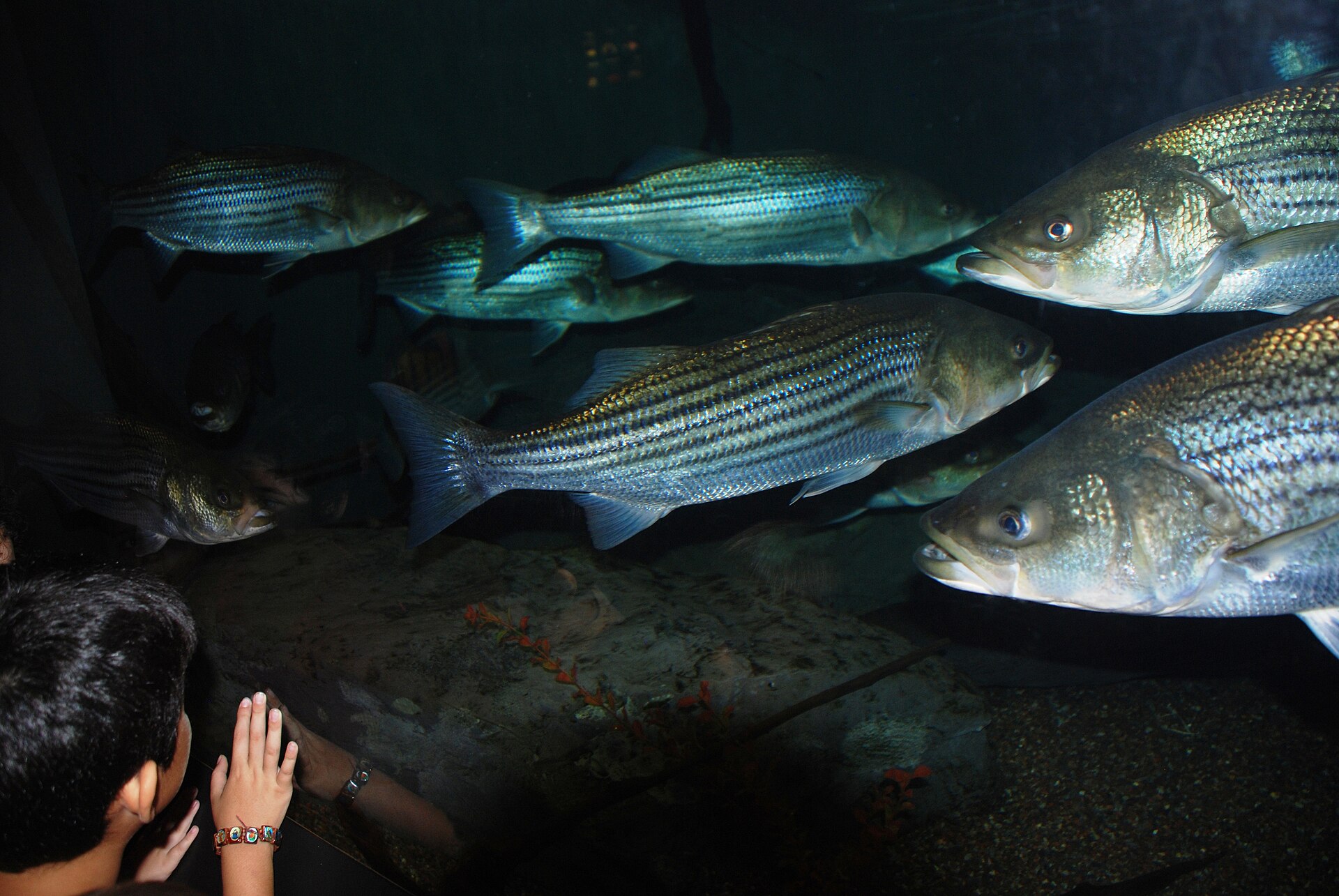
Stripers are the headline species on Mead — the lake's historical claim to fame, the schoolers that boil at first light, the deep suspended fish that tournament-grade sonar was practically designed to find. Mead's striper population has fluctuated with the threadfin shad forage base over the decades, but a healthy year produces fish from 18-inch schoolies up to 20-pound trophies.
Stripers move dramatically through the seasons. Spring sees them push toward bait in 30–60 ft. Summer mornings bring spectacular surface boils as schools chase shad to the top. Late fall stages them deep in the Lower Basin near Hoover. Winter pushes them into the deepest channel water, fishable but technical.
Largemouth bass
Mead's largemouth get less press than its stripers but the fishery is genuinely excellent. The water is clear, the structure is varied, and a 5-pound fish doesn't raise a single eyebrow. The biggest fish come from the Overton Arm and the back ends of coves, particularly through the spring spawn window in March through May.
Largemouth on Mead are heavily structure-oriented. Find a long rocky point dropping into 25 ft, find an isolated brushpile in 18 ft, find a submerged roadbed at 30 ft, and you've found largemouth water that holds fish year-round.
Smallmouth bass
Mead's smallmouth fishery has grown over the past decade and is now fully established as one of the best smallmouth fisheries in the Southwest. Look for them on rocky shorelines, deep ledges, and wind-blown points — the same general structure that produces smallmouth anywhere they live.
A 4-pound Mead smallmouth is a great fish; 5-pound fish are realistic; the lake has produced fish over 6 pounds in recent years.
Seasonal patterns
Winter (December–February)
The deep-water program. Stripers stage in 80–150 ft along channel walls and deep canyons, particularly in the Lower Basin near Hoover. Largemouth slow down dramatically — finesse worms on a drop-shot in 25–40 ft is the most consistent program. Smallmouth stack on deep rockpiles in 30–55 ft and respond to slow-rolled blade baits and small swimbaits.
Spring (March–May)
The best window of the year. Largemouth move shallow for the spawn — sight-fishing season starts in March in the warmer northern coves and runs through May in the colder main basins. Smallmouth follow shortly. Striper boils start in earnest in May as water temps climb past 65°F and shad school up. Spring is the editorial team's favourite Mead window — every species fishes well, the weather is mild, and the lake is at its prettiest.
Summer (June–August)
The morning and evening fishery. Surface temps climb past 80°F by mid-June and the midday bite collapses for all three species. The program becomes: be on the water at 4:30 a.m. for striper boils, fish hard for two hours, take a long lunch break, return at 7 p.m. for the evening bite. Heat exhaustion is a genuine concern — bring more water than you think you need.
Fall (September–November)
The transition months. Stripers feed heavily through October as water cools, often showing as boils all day rather than just dawn/dusk. Largemouth feed up before winter — crankbaits, vibrating jigs and Alabama rigs all earn their keep. Fall is the second-best window of the year on Mead, after spring.
The most productive structures
- Long rocky points — the universal Mead structure. Every basin has them. Always start here.
- Submerged roadbeds and roads — Lake Mead flooded existing infrastructure when it filled. Old roadbeds are magnetic structure, particularly for largemouth and smallmouth.
- Channel ledges — the original Colorado River channel runs through the lake. Ledges along it stack stripers year-round.
- Wind-blown points — wind concentrates plankton, plankton concentrates shad, shad concentrates everything.
- Brushpiles — the offshore brushpiles in 25–60 ft are largemouth gold.
Lures and rigs that work
A short editorial gear list that has earned its place on the boat:
- Topwater walking baits (Spook Jr, Whopper Plopper 90) for striper boils.
- Drop-shot rig with a 4-inch finesse worm for structure-oriented largemouth and smallmouth.
- Football jig with a Rage Craw trailer for deeper smallmouth on the rocks.
- 3.8" or 4.8" soft swimbait on a 1/4–3/8 oz jighead for suspended fish and points.
- 1/2-oz to 1-oz spoons (Kastmaster, Hopkins) for vertical jigging stripers.
- Live anchovies on a downline — the deadliest Mead striper rig that exists.
- Texas-rigged green pumpkin worms for shoreline largemouth in 10–20 ft.
Electronics — what you actually need
Mead is a fish finder fishery. You can catch fish without one, but you'll catch dramatically more with one. At a minimum, you want: 2D CHIRP sonar, side imaging, GPS with waypoint marking, and some kind of mapping. We cover this in detail in our best fish finders of 2026 review — for Mead specifically the Garmin Echomap UHD2 73sv is the strongest single recommendation in the mid-tier.
Live sonar (LiveScope Plus, ActiveTarget 2, MEGA Live 2) is a force multiplier on Mead and especially in the deep canyon arms — when stripers suspend at 60–80 ft and won't respond to anything except a precise vertical presentation, live sonar earns its purchase price in a weekend.
Licences, regulations and access
Lake Mead straddles Nevada and Arizona. A reciprocal arrangement covers most of the lake, but always confirm current rules with the Nevada Department of Wildlife and the Arizona Game and Fish Department before launching. Boundary lines and species-specific regulations occasionally change. The National Park Service charges an entry fee; quagga mussel inspections are mandatory.
The lake itself is part of Lake Mead National Recreation Area. Camping, beaching, and overnight stays are regulated — check the NPS website for current rules.
Where to start your Mead fishing career
If this is your first Lake Mead trip, here's the editorial team's recommended program:
- Launch from Hemenway at first light. Take the boat out into Boulder Basin.
- Find a long rocky point dropping into 20–30 ft. Fish a drop-shot with a green pumpkin worm. Catch 4 or 5 largemouth before the sun gets high.
- By 7 a.m., look for gull activity over open water in the basin. If you see birds working, run to them — that's a striper boil. Throw a Spook Jr or a chrome spoon.
- By 10 a.m. the surface bite is done. Move to deeper structure — a 40–60 ft channel ledge — and look for stripers on sonar. Vertical jig a 1-oz spoon directly on the school.
- Take a long lunch break. Refuel, hydrate, eat.
- Late afternoon (after 5 p.m.), return to the same long points from the morning. Smallmouth and largemouth turn back on as the water cools.
Do that for two weekends and you'll know more about Mead than 90% of visitors who go out once and never come back. The lake rewards repetition.
Frequently asked questions
Is Lake Mead too low to fish in 2026?
No. Water levels remain well below historical highs but the lake is fully fishable. Lower water concentrates fish on the deeper structure, which often makes patterning easier rather than harder. The main practical concern is launch ramp access — confirm with NPS before driving out.
What's the biggest bass ever caught on Lake Mead?
Lake Mead has produced striped bass over 50 pounds historically and largemouth into the high single digits and low double digits. The state records for striped bass and largemouth in Nevada and Arizona have both seen Mead contributions over the decades.
Can I fish Lake Mead from shore?
Yes — but the productive shoreline structure is limited compared to the boat-accessible water. Hemenway, Callville Bay and the rocky shoreline along Hoover Dam (where access is permitted) are the best shore-fishing options. A boat or kayak is strongly recommended for serious bass fishing.
When do stripers spawn on Lake Mead?
Lake Mead stripers spawn in tributary creeks and rivers (notably the Virgin River and the Muddy River into Overton) in March through May, depending on water temperature. The spawn isn't a primary fishing window the way the largemouth spawn is — the deeper striper movement just before and after is the more productive fishing pattern.
Do I need a guide for my first Lake Mead trip?
It helps. Mead is large, complex, and changes year over year as water levels shift. Lake Mead Fishfinders is an editorial publication and not a charter operator — we don't book trips — but for a first trip, a half-day with a currently licensed Mead operator is the fastest possible learning curve.
Keep reading
Related from the magazine
Species
Striped Bass Fishing on Lake Mead: Tactics That Work in 2026
Stripers boil at first light and sound at noon. Here's how to find them, mark them and stick them — every month of the year.
May 18, 2026 · 12 min read

Lakes
Lake Mead vs Lake Powell vs Lake Havasu: Which Should You Fish in 2026?
Three reservoirs, three personalities. Striper vs smallmouth vs largemouth — and which one fishes best at the worst time of year.
May 14, 2026 · 11 min read
Reports
Lake Mead Fishing Report — Updated Weekly
Current Lake Mead water levels, surface temperatures, where the bass are stacking up this week and what's actually catching fish.
May 25, 2026 · 8 min read